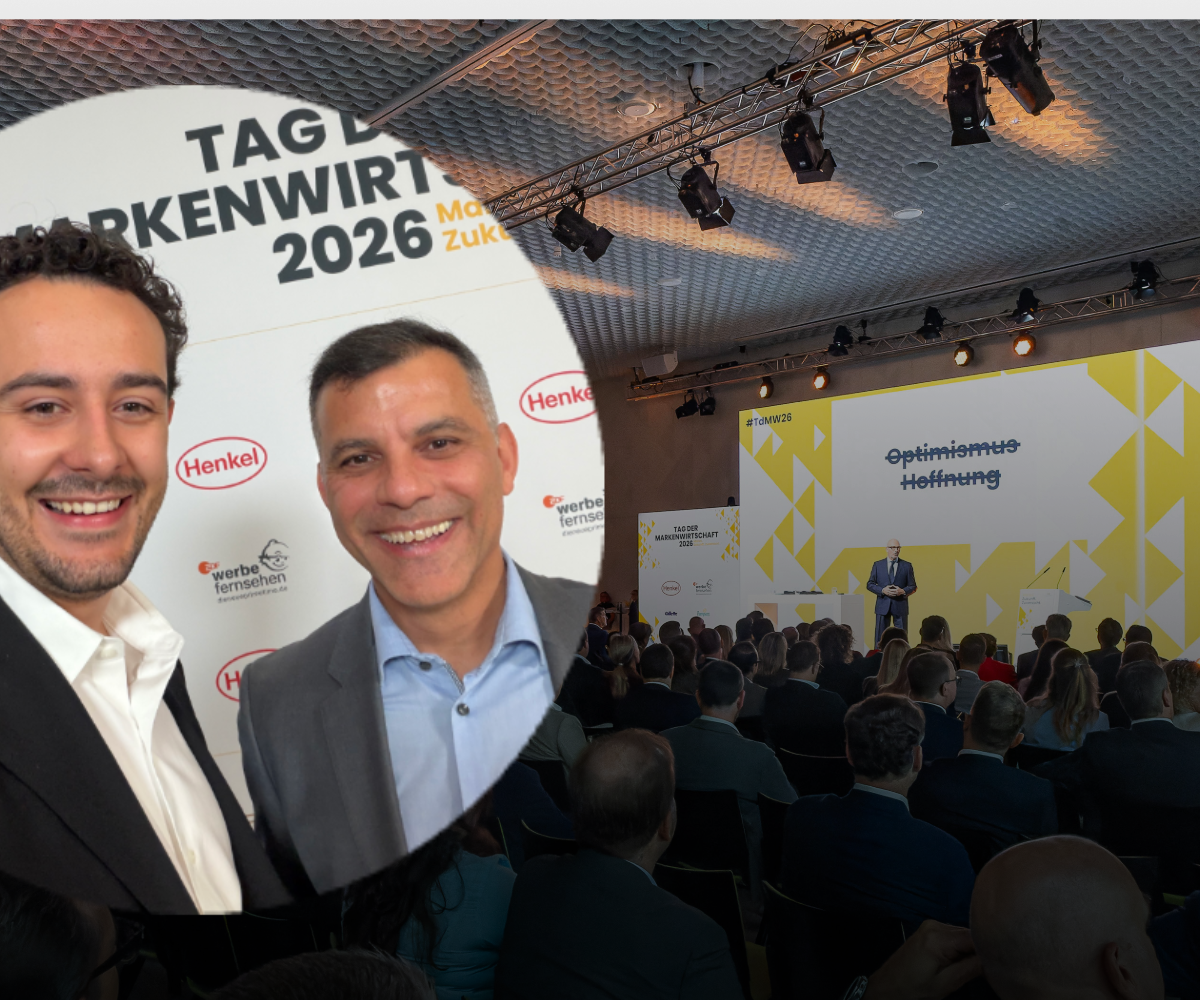
Germany's branded goods industry is not short of things to worry about. At the Markenverband's Tag der Markenwirtschaft in Berlin on 8 October, the agenda was dominated by regulation, bureaucracy, unfair competition from non-EU marketplaces and the state of German politics after a turbulent round of state elections. The association used the day to publish a manifesto calling for an end to "mistrust and overregulation".
Those concerns are real. But listen closely to what executives said about their own businesses, and a different picture emerges. The factors that will separate growing brands from shrinking ones over the next five years are mostly operational, and mostly within management's control: how companies work with retailers, how good their commercial data is, and how quickly they can turn an idea into something that works at the shelf.
The Markenverband represents 322 member companies and supporters, from Mittelstand family firms to Henkel, P&G, Beiersdorf and Nestlé. Four themes from the day deserve the attention of every consumer goods leader, and of the technology partners who serve them.
Growth comes from the category, not the conditions sheet
Henkel's Birgit Rechberger-Krammer, who leads Consumer Brands in Europe, offered the most candid diagnosis of the day. Since the inflation years, private label has gained share in many categories. European buying alliances have consolidated purchasing power. A single campaign now needs 50 to 60 assets across channels and audiences. The shelf, as she put it, has become an arena.
Her prescription was not tougher negotiation. It was a different model of collaboration, closer to what she sees in the UK and the US, in which brands bring consumer understanding, retailers bring shopper insight, and both are judged on growing the category. P&G's Astrid Teckentrup supplied the economic argument: according to a long-term P&G study, its brands contribute noticeably more to category growth than their market share would suggest.
The implication is uncomfortable for many commercial organisations. Joint business planning only works if a manufacturer can show, with credible numbers, what a promotion or a listing did for the category, not just for its own volume. Few companies can do that today. Promotion plans live in spreadsheets, post-event analysis arrives weeks late, and the conversation with the retailer drifts back to terms and conditions.
AI without a data foundation is a demo
AI featured in almost every session. Telekom CEO Tim Höttges, the first recipient of the association's new "Mensch Marke" award, described AI as part of every process at Telekom. GS1 Germany CEO Thomas Fell showed the AI agents he uses for correspondence, content and onboarding, and argued that people who work with agents will replace people who don't.
The more consequential remark came, again, from Henkel. Everyone wants to experiment with AI, Rechberger-Krammer said, but it only works where the data foundation is in place, and that is precisely where most companies struggle. The data exists. It is simply fragmented, inconsistent and expensive to clean.
For sales and trade marketing, this is not abstract. An assistant that recommends the next order for a field rep, flags a promotion that isn't running or drafts a retailer review is only as good as the account, product, pricing and promotion data beneath it. Companies that treat master data and process discipline as a prerequisite will get value from AI first. Everyone else will keep running pilots.
The pack becomes a channel
The most forward-looking contribution came from an unexpected source: the organisation behind the barcode. Fell's argument was simple. Brands spend heavily to win attention, yet when a shopper actually has a question about a product, the brand is absent. The answer comes from a search engine, a retailer's website or a marketplace.
GS1 Digital Link is designed to change that. The 2D code that is gradually replacing the 1D barcode carries not only the product number but also batch, best-before date and, where needed, a serial number. It resolves to a web address the brand controls, so the same code can show different content depending on who scans it, where and when. GS1 is working towards retail tills that can read these codes by the end of 2027.
Most discussion of 2D codes focuses on consumer engagement. The larger near-term value may sit inside the commercial organisation:
Retail execution: a field rep's scan opens the store-specific view, with the agreed promotion, planogram and a price check, instead of the consumer page.
Promotion compliance: checking price and display at the shelf closes the loop between the promotion plan and what actually happened.
Freshness and recalls: batch and date information makes audits and recalls traceable to individual stores.
Product information: recycling details and future digital product passport data can be updated without reprinting packaging.
None of this works without clean product data and a clear owner for the content behind each code. Adoption will be gradual, but the companies that start piloting now will be ready when retail is.
Speed is now a strategic capability
The most striking admission came from a company celebrating its 150th anniversary. Henkel acknowledged that large corporates are too slow. Trends are shorter-lived, and waiting for the perfect solution no longer works. Its response is to pilot new ideas in selected European markets, refine them and scale only what works. Verena Pausder of the Startup-Verband made the same point from the other side, arguing that established brands can learn speed and a willingness to experiment from startups.
This matches what we see in commercial transformation programmes. Projects that start with one market, one channel and one measurable outcome tend to succeed and expand. Big-bang rollouts that try to redesign every process at once usually lose momentum before the field sees any benefit.
What consumer goods leaders should do next
Policy will stay on the agenda, and the industry is right to push for workable rules. But much of the growth agenda is in executives' own hands. Three questions are a useful starting point:
Is your commercial data good enough to act on? If you would not let an AI agent make a recommendation based on your account, product and promotion data, fix the data before you buy the agent.
Can you prove category impact to a retailer? If post-event analysis takes weeks and stops at your own volume, you are negotiating on terms rather than on growth.
Does your field team know what was agreed before they reach the shelf? The gap between the promotion plan and the store is where trade spend quietly disappears.
For technology partners such as Salesforce, and for implementation partners like us, the message from Berlin was equally clear. Consumer goods executives are not asking for more features. They want reliable data foundations, faster pilots and visible results in the field.
Florian Weimann is an executive at Peak & Peak, a Salesforce consultancy for the consumer goods industry. He attended the Tag der Markenwirtschaft 2026 with his colleague Deniz.
In the meantime, if you want to take a closer look at your commercial strategy or broader commercial ecosystem, get in touch via our website or at info@ppeak.com.
Sources: Markenverband · Markenverband board and membership, March 2026 · Le Matin, 8 October 2026